


I love plantain.
Seriously… I’ve already used it so many times this year for one thing in particular.
Bee stings.
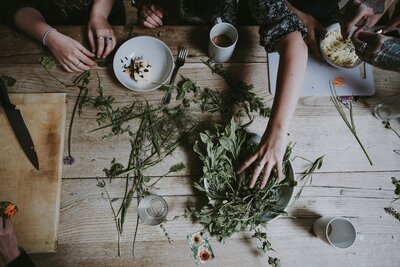
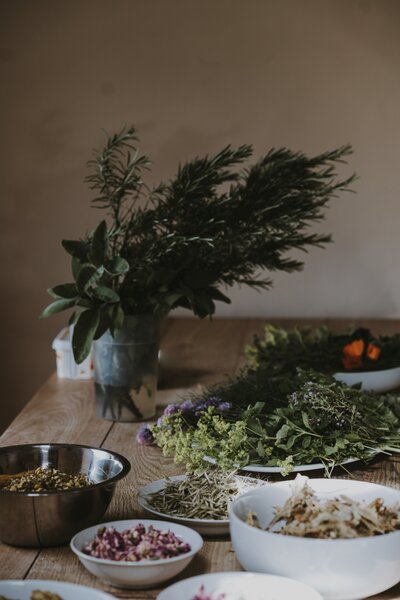
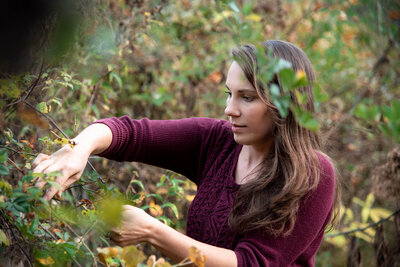
As much as I hate to get stung by a bee, I hate it when my kids get stung even more. My oldest has been stung 3 times already, and my littlest just got stung for the first time as I was gathering plantain from our yard and taking the photos you see here! I’ll have you know I immediately put what I’d gathered to good use, plastering it all over his face where it looked like the nasty wasp got him. Poor little guy! My middle son, Isaiah, SOMEHOW, has escaped getting stung so far this year. I’ll keep my fingers crossed that it stays that way, but if luck isn’t on his side and he does get stung… mama will be prepared with the goodness of plantain.
So let me tell you a bit about plantain and why it’s so great for bee stings, and then I’ll tell you about two different ways you can use it if you or your kid does get stung by a bee this summer.
Plantain For Bee Stings (Wasps Too!)
Plantain is an astringent herb meaning it draws the tissues together. This action is a result of the tannins found in the leaves.
Dark chocolate and wine also contain tannins, and if you’ve ever tasted them you know that they’re bitter, they’ll cause your mouth to pucker, and you start to produce more saliva in your mouth. This is a result of the bitter tannins. The bitter stimulates digestion, which is why you secret more saliva. Have you ever wondered why people say to eat a piece of dark chocolate after a meal or why you should drink a small glass of red wine while you eat? It’s because they help with digestion.
This same principle holds true for plantain. Sure you could use it to make your own digestive aid, but that’s not what I’m here to teach you about today. I just want you to know the science behind why it acts as an astringent. Remember…. “astringent”. It means – drawing, pulling.
When your toddler steps on a bee and you put crushed plantain on it, those tannins do their thing and cause the skin and tissues to tighten up. This helps to keep swelling to a minimum as well as reducing pain.
This astringent like action can also be used for helping to stop bleeding, reduce swelling and inflammation from burns, and to pull things out of the skin like venom, poisons, and embedded objects (dirt, small gravel, splinters, etc.).
Identifying Plantain In The Wild
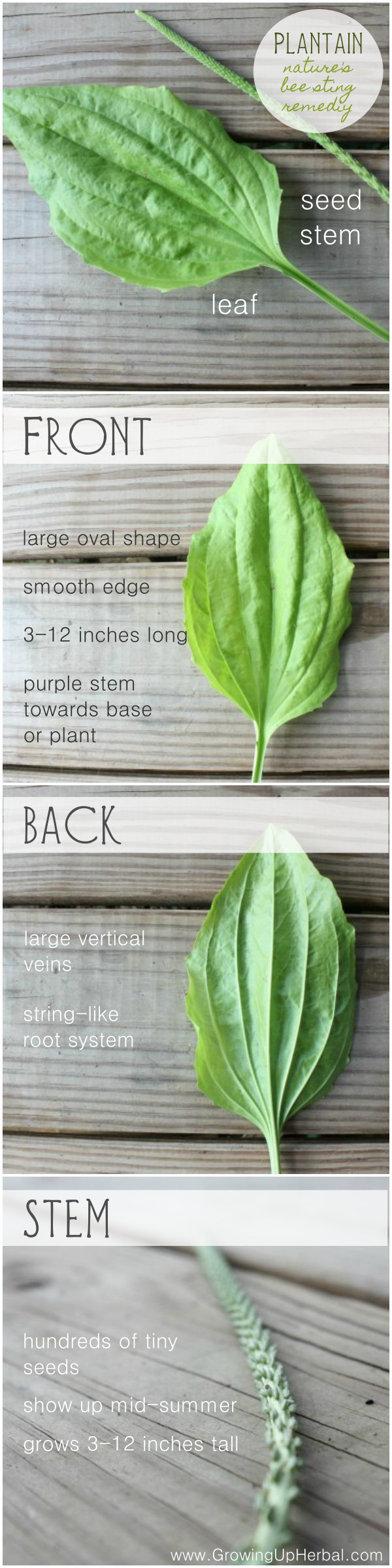
There are 250 different species of plantain that grow wild, not only in the US, but all over the world. Today I’m showing you what’s most common here in the US called Broadleaf Plantain. If you’re not from the US, Google plantain in your area. You’re sure to find it. There’s also another common variety of plantain here in the US called Buckthorn Plantain or Narrowleaf Plantain, and it can be used the same as the broadleaf version.
Plantain, for the most part, grows anywhere, but it prefers moist areas with full sun to partial shade and compacted soil. It also prefers warm areas so you should be able to find it as long as you don’t live in a very cold region of the world.
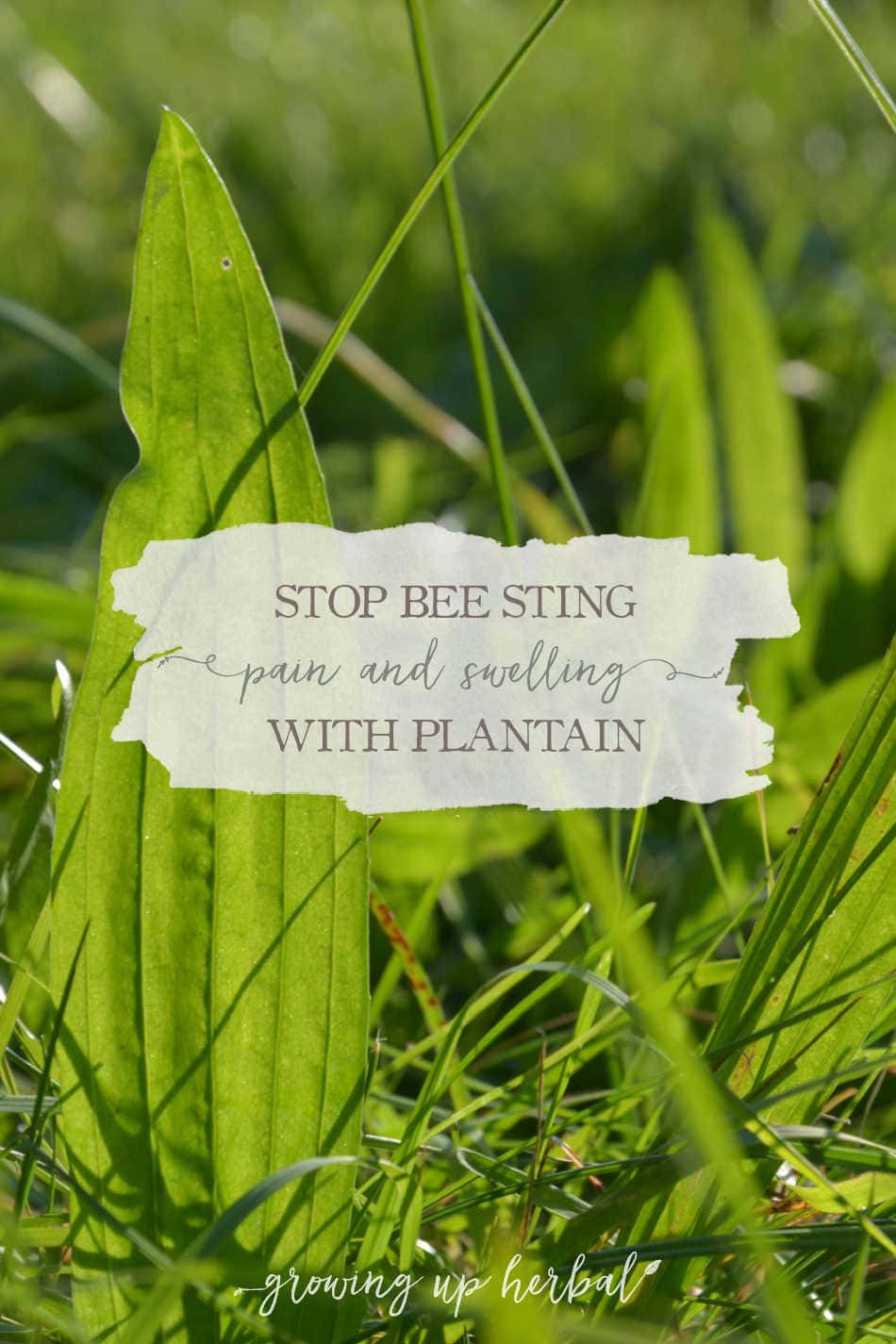
Today I’m going to show you Broadleaf Plantain in the photos and help give you some insights on how you can identify it. I’ve also included a video I shot on how to identify plantain and jewelweed if you’re into watching videos!
And for the video… enjoy! This is for using plantain for poison ivy, BTW!
How To Use Plantain For Bee Stings
Spitty Green Goo
The first and easiest way to use plantain for a bee sting (and this is how I usually do it) is to find it growing in your yard or close to where you are, break off a leaf or two, stuff it in your mouth, and chew it like a cow!
I’m so not joking. I really do chew it, and no, I don’t have photos for you. I’d be way too embarrassed! LOL!
Once it’s chewed up, spit it out and plaster your kid with your green goo. Sure you’ll look like a crazy hillbilly, but seeing your little one relax and start to calm down will make it worth it. Sure you’ll have green spit running down your mouth and you’ll be flossing green grass out of your teeth for a week, but hey… that’s the natural life!
In all seriousness, though, it’s not that bad. Just be sure to brush your teeth afterwards!
Leave the chewed plantain leaves on the sting for 20-30 minutes. It should help to reduce redness, itching, pain and stinging, as well as swelling. I’m tellin’ you… this herb is wonderful for bee stings.
I use it every single time, and I NEVER need an antihistamine such as Benedryl… and we have bee allergies in our family!
Plantain Vinegar
Alright, so if chewing and spitting out plantain leaves is just too much for you, that’s totally fine. You have another great option, but this one takes a little longer to make.
It’s called plantain vinegar.
All you need to do here is find some plantain leaves, chop or tear them up, fill a glass jar to the top with your fresh plantain, and then add in your apple cider vinegar… filling your jar up. Put your lid on and set it in a cool, dark cabinet for 2-3 weeks giving it a good shake every day or so. After your time is up, strain your liquid through a cloth that will catch your herbs making sure to squeeze the vinegar out of the plantain leaves once you’re finished. You can also use dried plantain for this if you can’t find fresh. See the steps in the photos below.
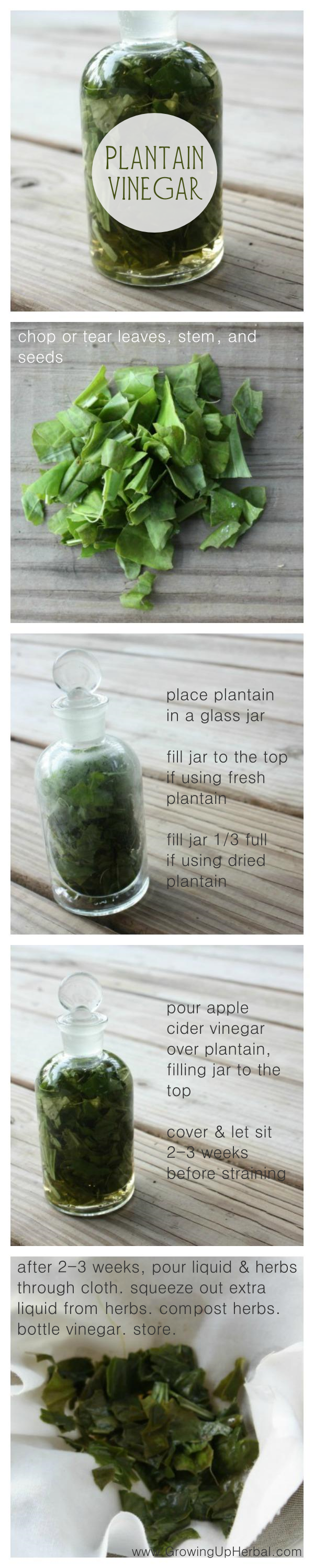
Next up, once you’re vinegar and herbs are separated, store your plantain vinegar in a glass jar in a dark spot along with some cotton balls and band-aids. When your child gets stung, soak a cotton ball in your plantain vinegar, put it on their sting and cover it with a bandaid so it will hold. Voila! Your little one will be good to go in no time.
Don’t forget to compost your plantain after you strain it from the vinegar… or eat it. Pickled plantain is pretty yummy if you like vinegar tasting things!
Also… plantain vinegar is great for acne. This doesn’t really apply to small children, but if you have a teenager or if you tend to get acne, you can soak a cotton ball in your plantain vinegar and rub it all over your face after washing it in the morning and before bed. The plantain vinegar will help tighten the tissues, toning your face and pulling the toxins out of your skin. Keep it up! In 2-3 weeks you’ll have nice clear skin!
Enjoy, and here’s to you doctoring your little’s summer boo-boos the natural way!
Thank you for sharing this Ms.Megan.
‘Twas very educational, & very interesting video.
Welcome!!
Hi Meagan, can i use this herb when you are on dialysis?
I don’t know of any issues with plantain and dialysis, but it’s always best to check with your doctor on something like this.
You didn’t mention mosquito bites, but do you think it would be very effective at reducing the itch and swelling caused by the little buggers? I’m apparently very tasty to mosquitoes, and Bubba swells up horribly. Thankfully we haven’t had to deal with any bees this year.
Yes! Plantain is great for all sorts of bug bites. Again it tightens the tissues which helps decrease swelling and itching. Most bee stings itch a lot too after being stung, but with plantain, the itch is definitely not so bad. I would definitely say it would help with mosquito bites.
I am also Northernwood Gardens on fb.
What kind of jar is this and where did you get it. Great article.
That is so old chemistry lab jar from the college I went to. I bought a bunch of them at a yard sale once! I love them!
Just this morning my doctor told me to make a tea with plantain (called ribwort in New Zealand) for a persistent cough my daughter has. He showed me a photo, though the leaf did look a lot skinnier than the one in your pictures. Will have to start looking for it . . .
Awesome! I suppose he wanted you to use it to help dry the cough up? Is that right. I love it that doctors prescribe herbs and other natural remedies in other countries… it’s great! Thanks for sharing Kristen!
I have used plantain, chopped up in a food processor to draw the infection out of a wound. My husband injured his toe, and when he started to get red lines running up his leg, we used the plantain on it, and it drew the infection out within an hour. I also recommended it to an elderly man who had a very ugly, infected boil, and it worked well for him too.
I have found here in North Carolina that there are two varieties of plantain, one has narrow leaves, and one has broad leaves, like the one you showed pictures of.
Yeah, I think the narrow leaf and broad leaf are the two most common in the US, and from my understanding they both work well. We’ve used it on things that have started to look infected too! It’s such an amazing herb… definitely one of my favorites! Thanks for sharing your experience with it!
Our teenage son reacts terribly to poison ivy. I’ve learned to put plantain leaves through my juicer, add 1 teaspoon to water and have him drink it. It stops the swelling from getting worse immediately. I also crush the leaves and spread them across his swollen face. It helps with the pain and itch.
Love it! Plantain leaves aren’t very juicy so I’m sure you have to use a lot of them to get a decent amount of juice from them. Thank goodness they grow abundantly in most places!! Thanks for sharing.
I always heard that baking soda on bee stings helped, and once I learned about plantain, started incorporating mashed plantain in the poultice. It seems to work well…
Does the plantain vinegar last indefinitely?
Yes!
Can you still use plantain 24 hours after a sting.
You can as it will still help to tighten the tissues, but it won’t help pull venom out at that point. Maybe focus more on anti-inflammatory herbs like calendula or chamomile. They’ll help with swelling and pain a bit. HTH!
YUP. it works. Yellow jacket or wasp (whichever takes a chunk out of you) got in my rubber boot today. Tossed boot and sock and immediately looked around for Plantain. Could only find the skinny leaf type. very young. Chewed, spit, stuck it on the foot and waited. was far from the house on the farm, so wrapped my sock tight around the foot, stuffed in back in the boot and went back to work. By evening, just a hole and slight discoloring. GOOD STUFF! THANK YOU FOR THIS INFORMATION! GOOD JOB!!!
Thanks for sharing your experience Laurie! I too have seen it help with a wasp sting (little booger was in my pants when I put them on!!) as well as stings my children have received. It’s the FIRST thing I reach for, and never lets me down.
Well I knew somewhat about plantain but forgot most of it except that it was good for bee stings or wounds( if I remembered correctly) well I was in my garden and my child on the deck started screaming on the deck and ran in the house. My older son with me overheard him say to my husband( indoors) that he was stung by a bee/ wasp. Since I was in the garden I quickly grabbed two pieces of plantain, brought it in, washed it, chewed it and stuck the stuck on both of his stings. They were big. Anyhow aside from him crying, within a little bit he stopped crying and I asked if it hurt and he said ” not anymore” never did this before but wow . I checked it right now about 6 hours later and I swear, my son said that it shrunk, I could hardly find it. While I was chewing the plantain is when I typed plantain in and it referred me to your website, where I confirmed that plantain is perfect for it. Well your article is so good that I kept on reading . So yes, it really does work. And by the way, I love your website and will be reading more for sure
Thanks for sharing Diana! I love it when those lightbulbs go off and we actually get to SEE the herbs work quickly. These kinds of experiences are what really helped me to see that herbs work and want to learn more about using them with my kids. Plantain and bee stings were one of the first things I learned about and used. Needless-to-say, we rarely ever take benedryl when we’re stung by a bee. Plantain goes on immediately and we all do fine! Thanks for sharing your story with me, and I hope you find lots of great tips and information here on Growing Up Herbal. Welcome mama!!
Wasps, hornets, and yellow jackets are NOT bees. Not everything that stings is a bee!
Thanks for so kindly clarifying that. I’m actually not trying to be specific about what is and isn’t an actual “bee,” and I don’t think making that distinction adds to the point of the post. My goal is to explain how plantain can help with pain and swelling when you get stung by an insect. I am glad that you’re very knowledgeable about these things and feel the need to inform those of us that aren’t. I’ll make sure to store that information for future use… if I ever need it. I have included an update in the post as well.
“Kindly clarifying” lol. Maybe the point they were trying to make is honeybee venom tends to be acidic that’s why, as someone else mentioned, baking soda works wonders for immediately taking away the pain. In other pests, like hornets, their venom tends to be alkaline so vinegar works great for nutralizing that pain. In either case though, the plantain works great as you said, for long term relief from pain, swelling, and itching. My husband keeps bees and will use plantain, but something that works even better is bee balm. Just make sure the bee balm is a heirloom variety and not a hybrid. Right now I’m trying to figure out a concoction of bee balm and baking soda for stings, maybe I’ll even toss in some plantain.
Thanks Meagan!
That’s so interesting, Katie! Thanks for sharing with me! I did not know that bee balm worked for bee stings, but it totally makes sense seeing how many herbs are named after their common uses. I wonder if you could powder freshly dried bee balm and combine that with baking soda (and even powdered plantain) to apply to bee stings? If you try it, let me know how it goes for you. I’d love to know. I did know that lemon balm is good for bee stings, but honestly, plantain is my go to although none of us have been stung by a honey bee… only wasps and hornets. I’ll definitely remember to use baking soda if we ever do end up with a honey bee sting though. Thanks!
Mixing powdered bee balm & baking soda may be the way to go. I make a paste with just water & baking soda and it takes the pain away immediately, but does nothing for the after effects of swelling & itching whereas bee balm does. We’ve also only ever used bee balm fresh as a mouth poultice, so I’ll have to see if it works just as well dried. I will let you know what I come up with and what seems to be working for us.
So, funny story after my comment the other day. I was watering plants by one of our hives yesterday and really ticked off one of the bees and got stung. I ran and got the bee balm and did a mouth poultice. For the first time ever I had a severe reaction to a sting and had to go to the ER. They seemed a little confused because where I was stung on my hand was really not all that red or swollen. And this morn you can just see the dot where the stinger went in and no itching. So bee balm still works awesome for bee stings! Just not allergic reactions, but I already knew that. Lol.
Oh, my word! Well, I’m certainly glad you are okay, and thanks for sharing the info about the bee balm. I tried transplanting some of it into my herb garden a few years back, but it didn’t take. I’ll have to try it again, though. I’d love to have some up here. Have you looked into taking strong anti-inflammatory herbs internally when you are stung to see if that helps with the allergic reaction part? I’m not saying that it will keep you from having a reaction, but it may help it not be so bad. Just curious.
Katie, thanks for your input about wasp venom. I just got stung and I can tell it’s a wasp because it is so continuously painful. My wrist is more convinced it’s being helped by the plantain with the added apple cider vinegar.
I don’t know how to tell if my bee balm is heirloom or not, so I’m going to assume it isn’t. Ironic! that the antidote to stings would be called bee balm. I wonder if it matters what kind of stings.
Do you happen to know how well it would work when you have an allergy to wasp/hornet/bee stings? Would it pull the poison out fast enough?
I wouldn’t solely rely on herbs to keep you from having an allergic reaction to something you have an allergy too. I know a lot of people have had success using herbs for allergies, but that’s mostly seasonal allergies. There are also things you can do for severe allergies (like immune support, managing inflammation, etc.) with herbs, but that’s ongoing and should be under the supervision of an experienced herbalist. I would say that if you have an allergy to bees and you were stung, it wouldn’t hurt to use plantain. In fact, I’d recommend it. Plantain and echinacea together used to be used to soak a person’s hand or foot in when they were bitten by a poisonous snake. Supposedly it helped the injury to not be as bad so again, it wouldn’t hurt to use it. I would still follow your doctor’s advice as to what you should do after you’re stung as well. Hope that helps Dawn!
Hi Meagan,
I too am a beekeeper, and I understood your Blog. It was your blog that helped me tremendously yesterday. If anyone is interested in Plantain they should do further research; as it is not limited to just hornets, honeybees, snakes etc. I was stung during an inspection Sunday afternoon, my hand and forearm swelled like pop-eye. Monday AM upon wakening was even worst. I looked up self help remedies and thankful I came across you. I went out to my yard, rolled the leaves between my fingers and slapped it on and put a bandaid over it; within 15 minutes I was making a half fist, an hour later a full fist. I did it again last evening and I woke up to my hand being almost normal again. THANK YOU – THANK YOU
I’m so glad to hear it helped you, Connie! I’ve heard that honeybees are one of the stings that cause the most swelling! Glad you’re okay.
I just found out about using Plantain for stings and insect bites yesterday. Well, today my youngest daughter was stung twice by a Bumble-bee! Yes, the most gentle of the bee family stung my daughter- she must have really ticked it off! Anyway, your article came just in the nick of time- I put the Plantain in my mini food chopper (my elder daughter “borrowed” my mortar and pestle a few years ago) and she currently has a poultice on the stings. One sting is really swollen, so I figure it will take a little longer to pull the venom (?) out, but she doesn’t feel as much pain and it’s only been about 10 minutes since I put it on. Here’s hoping she’ll be back at the park playing with her friends soon! Thank you so much for this article- I never would have known that the “weed” growing abundantly in my yard here in North Carolina, USA, was so good for us in so many ways!
I know, Lorelei! This is definitely our “go-to” for bee stings. It really does help with pain, especially if you get it on quickly. I hope she feels better soon!
4
Thanks for telling me about Plantain Meagan. I just started rasing honey bee’s and I have been stung. It will come in handy next time the lady’s sting me.
You’re very welcome, David. I hope it serves you well!
Hi Meagan,
Really great article and comments are even high quality. Do you know if plantain oil would work the same way? I have never seen plantain leaves around our area but having the oil on hand might be useful? I don’t know. The vinegar intrigued me.
Thanks!
Greg
Yes, Greg. Plantain oil would work similarly, but I believe the vinegar will absorb into the skin faster than an oil will which is why it’s preferred for insect bites and stings over oil. Plus, it has its own therapeutic value as well. Hope that answers your question.
Hi Megan , I come from Tasmania and we have a wood fire for winter, I carried some wood into the house and a little while later I was on the couch watching tv, I reached over and grabbed my drink bottle without looking went to have a sip and whammo a wasp sting to the lip. I jumped up washed it and got some of my home made plantain oil soaked in a cotton ball straight onto my lip, for about half an hour. No pain no swelling. I have been stung on the arm in the past and the pain was incredible a huge swelling that was hard and hot for about a week.
Thank goodness for plantain who new a weed would be so remarkable in so many ways.
Cheers Cate
Tasmania
Australia
Awesome, Cate! I’m so glad you had that available and that it worked for you. And thanks for sharing it here with me. I love hearing herbal success stories!
4.5
5
Just chewed up two leaves to place on my 11 stings on my ankle and I got instant relief from the pain. I just hope it takes the swelling down as I can barely walk.
Oh, no! Eleven stings! Ouch! I’m glad it helped, and I hope you have a quick recovery!
I live in the rural Methow Valley in the North Cascades. Just a couple of weeks ago a friend told me about using plantain for bee stings. My neighbor has been complaining for months that she has a lot of plantain coming up in her pasture. I have a bit of it coming up in my hay fields. Last weekend when I was extracting honey I got stung and immediately remember about plantain. Found some leaves, chewed them, put the poultice on and held it on with a bandaid, and went back to work. I was amazed that it stopped the pain immediately and I had no swelling. Got stung again today and same great result. Had to look it up to find out more about it. Thanks for this info. I am happy to have plantain growing here and will make some of the vinegar recipe for when we have three feet of snow on the ground this winter. Not that there will be bees around then, but yellow jackets will be out before the plantain grows again. I live near the town of Twisp, whose name is said to refer to the sound of the yellow jackets that thrive here. I will use this on my dog and cat for the occasional stings they get too.
Great to hear, Rob. You can always harvest and dry plantain leaves next year, or soak them in a jar of vinegar, and use them on bee stings that happen when they’re not growing fresh outdoors.
Thank you, Meagan! Was stung by a honeybee yesterday around 5:30 p.m. trying to pull a grapevine out of the flower bed. I had gloves on, it got me just above the glove 2 1/2 inches from wrist, got gloves off and removed stinger. PAIN, all I could think of was pull it out, so I grabbed the castor oil and bentonite clay, swelling wasn’t too bad when I took a shower at 9:30 didn’t reapply. Went to bed at 11:30, woke at 3:10 a.m. itching like crazy from knuckles to elbow! No meds in my house! I have a ton of comfrey, three weeks ago I harvested for salve, happened to find a big patch of long leaf plantain I also harvested. Dried both, crushed, put in jar with 12 oz olive oil two weeks ago. Found you, applied, God is so Good! IMMEDTATE relief! Arms a little green, lol. I’ll be harvesting plantain at sunrise to make the vinegar! Next time I’ll be chewing! Thank you!
I’m glad you had something on hand that was helpful! I’ve found that keeping fresh plantain poultices on for the first several hours after a sting really helps.